

Developing accessibility in university campuses: Metropolia University of Applied Sciences and the Accessibility Index
GET TO KNOW THE ACCESSIBILITY INDEX!
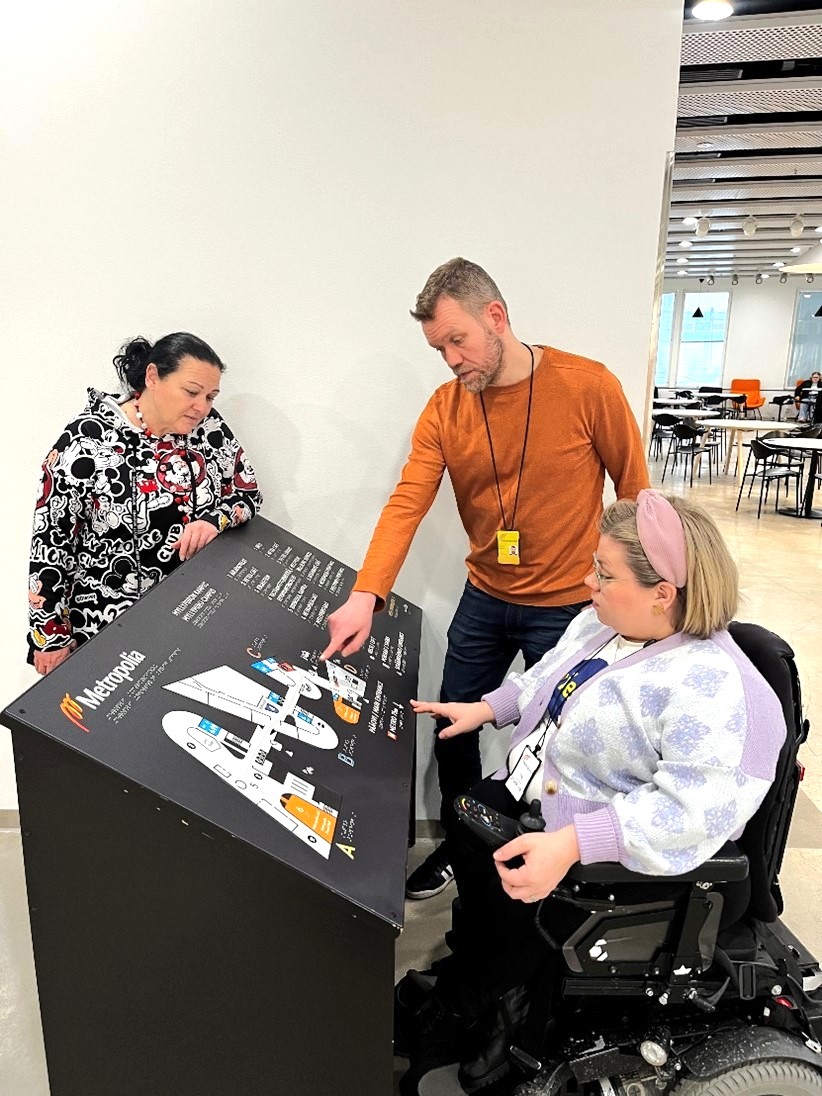
Metropolia University of Applied Sciences serves nearly 18,000 students and over 1,000 staff members across its four campuses in the Helsinki metropolitan area. When the need arose in 2023 to update campus arrival instructions to better accommodate special user groups, a key question emerged: how can accessibility be managed if there is no unified view of its current state?
The traditional option was familiar and somewhat frustrating: an accessibility audit is carried out with significant effort, a report is produced, and then it is left to gather dust on a shelf. Metropolia wanted something that would keep development work alive and guide the organisation towards concrete actions.
A partnership built on practical trust
Riesa was selected as a partner naturally. The organisations had already collaborated on smaller projects, and Riesa’s professional approach had proven convincing from the very beginning. When the opportunity arose to adopt the Accessibility Index among the first organisations, the decision was easy.
Metropolia is likely the first higher education institution in the world to measure the accessibility of its campuses using an index.
What was done?
Accessibility indexing was carried out across all four Metropolia campuses, with facilities assessed from the perspective of the student journey, taking into account mobility, auditory, and visual environments. An Accessibility Index was created for each campus, providing a real-time representation of the current state of accessibility.
The clear Accessibility Index made it possible to identify and prioritise development needs effectively: some issues can be addressed quickly and at low cost, while others require more extensive work. Thanks to the transparency of the Accessibility Index, measures can be easily budgeted and scheduled within Metropolia’s available resources.
Accessibility Index vs. traditional accessibility audits
Head of Facilities Patrik Kuhlman highlights three key benefits. The first is transparency: Metropolia now knows exactly where it stands and what needs to be done, and development work is no longer based on guesswork. The second is communication. The Index enables open and concrete communication about accessibility to all user groups, supporting, for example, the organisation of events and studies. The third is maintaining momentum: the Index does not remain a static report but actively guides organisational actions and keeps development moving forward.
The collaboration has also broadened Metropolia’s understanding of what accessibility means. It is not just about the entrance or an individual restroom, but about a comprehensive whole that includes mobility, vision, and hearing, and applies not only to people with disabilities but also to older users and other groups with specific needs.
“In an accessible and inclusive study and working environment, everyone can participate on equal terms regardless of their characteristics. Riesa Consultative is an important partner for us, providing strong support for our principle of continuous development,” says Patrik Kuhlman, Head of Facilities at Metropolia University of Applied Sciences.