


Accessibility Index Supporting Passenger Terminal Development: The Port of Helsinki
GET TO KNOW THE ACCESSIBILITY INDEX!
Port of Helsinki introduced the Accessibility Index at the West Terminal, Olympic Terminal, and Katajanokka Terminal to improve the accessibility of passenger terminals serving millions of travelers.
With the help of the Index:
- The current state of terminal accessibility was assessed
- Development areas were identified with the help of numerical data
- Measures are targeted cost-effectively
- The user experience is being improved for all passengers
“Our goal is smooth mobility for everyone. Clear routes and signage make travelling easier.”
– Port of Helsinki
Riesa and Port of Helsinki in Cooperation – The Accessibility Index Supporting the Development of Passenger Terminal Accessibility
The passenger terminals serving scheduled traffic at the ports in central Helsinki — the West Terminal, Olympic Terminal, and Katajanokka Terminal — serve thousands of passengers every day. In 2024, the total number of passengers in scheduled traffic at these terminals reached an impressive 9.4 million people. Consequently, the scheduled traffic serving millions of passengers annually is a central part of the City of Helsinki’s transport infrastructure. For this reason, it is important to further develop the terminals to be even more accessible and user-friendly for everyone.
The Accessibility Index as Part of Development Work
The West Terminal, Olympic Terminal, and Katajanokka Terminal in Helsinki have adopted the Accessibility Index. The Accessibility Index is a metric that indicates the level of accessibility of space on a numerical scale. This clear numerical data serves as a foundation that helps the terminals identify areas for improvement and develop accessibility in an efficient and systematic way.
Accessibility Index Surveys – Metrics for Development
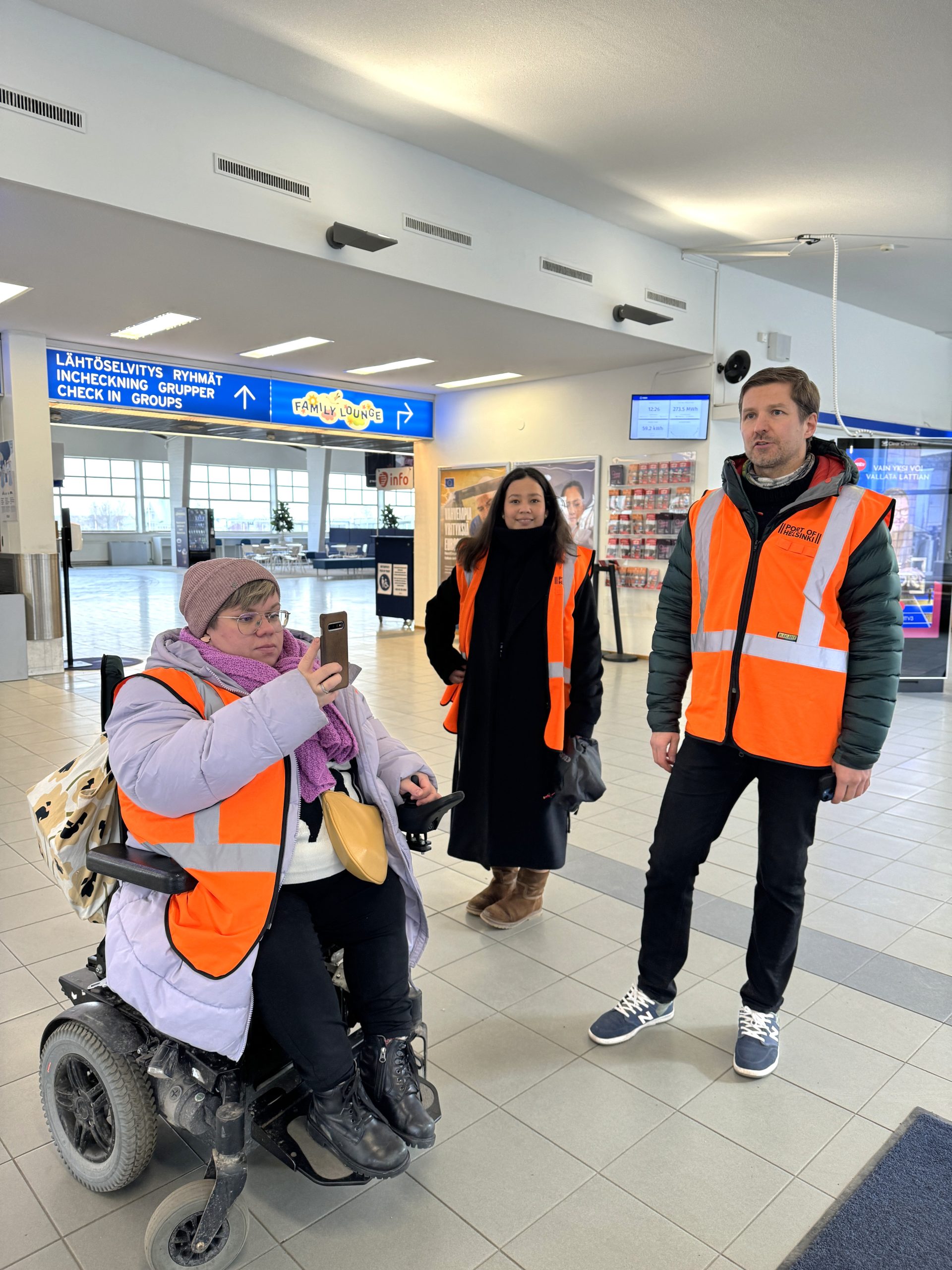
Riesa’s Accessibility Specialist, Ella-Riikka Isometsä, has participated in the accessibility audits of the terminals and been involved in the implementation of the Accessibility Index together with Terminal Manager Kristina Jaroensri, who is responsible for developing accessibility at the Port of Helsinki’s passenger terminals.
“Our goal is to make our terminals even more user-friendly and to ensure that they offer smooth and accessible environment for everyone. For example, accessible routes and clear signage make traveling smoother.”
– Kristina Jaroensri, Terminal Manager, Port of Helsinki
Based on the accessibility audits carried out using the Accessibility Index, the passenger terminals receive index scores that describe the current state of accessibility and help identify areas for improvement. This numerical measurement provides concrete data that enables terminals to take actions to improve passenger experience. The Accessibility Index also makes it possible to clearly communicate the current state of accessibility in terminals.

Developing Accessibility – More Than Meeting Minimum Requirements
The Port of Helsinki has understood that accessibility is not merely about meeting the minimum legal requirements. Above all, it is about improving the passenger experience at every level. In developing accessibility, the needs of people with mobility, hearing, and visual impairments are considered, without forgetting senior travelers and families. With the help of the Accessibility Index, the user-friendliness of the terminals can be further developed, thus offering even better services to passengers.
Next Steps – Continuing the Development of Accessibility
Accessibility has long been part of the development path of the passenger terminals. The Accessibility Index makes it possible to direct improvement measures correctly and cost-effectively, enhancing the user experience and ensuring that travelling is safe and pleasant for everyone. The next step will be to plan further actions that will advance accessibility development step by step.
The Port of Helsinki is a forerunner in implementing the Accessibility Index in passenger terminals, and its adoption highlights the Port of Helsinki’s commitment to creating an accessible passenger experience for all.